
If you have lived in the Valley for even one summer, you know what monsoon season looks like. The sky turns an eerie orange, dust walls taller than office buildings roll in from the east, and within minutes, a storm that dropped an inch of rain in 30 minutes has moved on, leaving downed trees, flooded streets, and the occasional roof casualty behind. But when does the Arizona monsoon season start?
If you are new to the Phoenix or Gilbert area, monsoon season can be a genuine surprise. Either way, knowing when it starts, what to expect, and how to prepare your home before the first storm hits is one of the most practical things you can do as an Arizona homeowner.
When Does Arizona Monsoon Season Start?
Arizona monsoon season officially runs from June 15 through September 30, a window established by the National Weather Service. The first few weeks of June are typically quiet. The real activity begins in early to mid-July, when a high-pressure system builds over the Four Corners region, altering wind patterns and driving moisture into Arizona from the Gulf of California and the Pacific Ocean.
That shift from dry, westerly winds to moist, southerly winds is what defines the monsoon. Once the southerly flow establishes, the combination of desert heat and afternoon convection creates conditions for the intense, fast-moving storms the Valley is known for.
Storm activity usually peaks between mid-July and mid-August, when Arizona receives more than half of its annual precipitation. September can still produce significant storms, but activity generally winds down as temperatures drop and atmospheric moisture retreats.
Arizona Monsoon Season at a Glance
| Month | Activity Level | What to Expect |
|---|---|---|
| June 15–30 | Low | Occasional dust storms, dry thunderstorms |
| July | High | Strongest storms, heavy rain, haboobs, flash flooding |
| August | High | Continued intense activity, peak annual precipitation |
| September | Moderate | Tapering activity, still possible significant events |
One important distinction: the monsoon season is not characterized by continuous rainfall. It is defined by daily or intermittent afternoon and evening thunderstorms that are often short-lived but intense.
Monsoon thunderstorm activity accounts for roughly half of the annual precipitation in central and northern Arizona, and two-thirds to three-fourths of the annual precipitation in southern Arizona.

What Is a Haboob and Why Does It Matter for Your Home?
A haboob is a large dust storm generated by the outflow winds ahead of a monsoon thunderstorm. They can arrive with little warning and zero-visibility conditions within minutes. For your home, a haboob creates immediate concerns:
- Dust infiltration through windows, doors, and gaps in the building envelope
- Damage to HVAC systems from debris entering equipment and ductwork
- Roof and fence damage from the high winds that accompany the storm front
- Pool contamination from heavy dust loads
- Power outages when lines go down
The haboob is almost always followed immediately by heavy rain, which turns loose dust into mud and sends debris across yards and rooftops. Windows and doors that do not seal well become real problems during and after these events.
How Monsoon Storms Affect Arizona Homes
Monsoon storms can produce intense rainfall in a short period, often leading to flash flooding, especially in areas with dry washes or steep terrain. A single storm can drop half an inch of rain in 15 minutes with wind gusts exceeding 60 mph.
The parts of your home most vulnerable during monsoon season include:
| Component | Vulnerabilities and Issues |
|---|---|
| Roof | Loose or damaged shingles, failing flashing around vents, improperly sealed skylights, and drainage issues on flat or low-slope roofs |
| Windows and Doors | Dried-out seals, cracked caulking, and gaps in sliding glass doors allow wind-driven rain and dust infiltration |
| HVAC Equipment | Damage to outdoor condenser units from wind and debris, dust infiltration, reducing efficiency, and causing damage |
| Drainage and Grading | Poor yard drainage is causing water to pond near the foundation, increasing the risk of flash flooding in low-lying or wash-adjacent areas |
| Block Walls and Fencing | Cracks, deteriorating mortar, shallow post installation, leaning sections, and rotted wooden posts leading to failure during strong winds |
Monsoon Prep Checklist for Phoenix Valley Homeowners
Getting ahead of the monsoon season before June 15 is the best approach. Here is a practical pre-monsoon checklist for Arizona homeowners:
Roof and Exterior
- Inspect for loose, cracked, or missing shingles or tiles
- Check flashing around vents, skylights, and any roof penetrations
- Clear debris from flat roof drains
- Confirm all exterior light fixtures are sealed against water intrusion
Windows and Doors
- Check all exterior windows and door seals and weatherstripping
- Replace any cracked or dried-out caulking around frames
- Test sliding door tracks and confirm they are clean and functioning
- Add door sweeps if gaps exist at the bottom of entry doors
HVAC
- Replace air filters before the season starts
- Have the outdoor condenser cleaned and inspected
- Confirm return air vents are not positioned near ground level, where dust infiltration is highest
Yard and Drainage
- Clear gutters and downspouts completely
- Confirm grading slopes away from the foundation on all sides
- Trim trees and remove dead branches before winds arrive
- Secure or store loose outdoor furniture and decorations
Block Walls and Fencing
- Walk the perimeter and look for cracks, leaning sections, or deteriorating mortar
- Check fence posts for stability, particularly wooden posts that may have rotted at the base

What Monsoon Season Reveals About a Home
For anyone buying a home in the Phoenix or Gilbert area, monsoon season functions as a stress test. It reveals exactly how a home handles water, wind, and extreme heat cycling. A home that has been through several monsoon seasons without proper maintenance may have accumulated:
- Moisture damage behind walls from window or door seal failures
- Roof damage that has been patched but not properly repaired
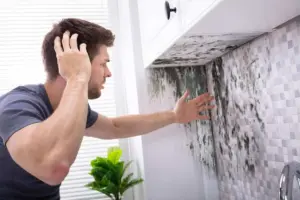
- Mold growth in areas with poor drainage or any history of water intrusion
- HVAC wear from running through extreme heat cycles, combined with heavy dust loads
- Foundation settling from repeated wet-dry soil cycling
If you are under contract on a home and the monsoon season is approaching, or if you have just come through one, a comprehensive home inspection is one of the most valuable steps you can take before closing.
Related Questions
- Can a home inspection identify monsoon-related damage before I close? Yes. Checklist Inspections evaluates roof conditions, window and door seals, drainage, HVAC systems, and structural components as part of every residential inspection. If a home has sustained monsoon damage that has not been properly addressed, a thorough inspection will document it before you are responsible for it.
- Does thermal imaging help find monsoon water intrusion that is not yet visible? Absolutely. Checklist Inspections uses thermal imaging technology to detect moisture behind walls and ceilings that is not visible to the naked eye. This is especially valuable after monsoon season, when water intrusion from failed seals or improper flashing may still be present in wall cavities without any visible staining.
- Should I schedule a mold inspection after a significant monsoon water event? Yes. Monsoon-related water intrusion creates ideal conditions for mold growth, particularly in homes with a history of moisture issues. A mold and air quality inspection can determine whether remediation is needed before a minor issue becomes a major one.
- Is a new construction home at risk from monsoon damage? Yes. New construction homes are not automatically immune to monsoon-related issues. A new construction inspection before closing helps confirm that the home is properly built to handle Arizona’s summer storms.
- Does Checklist offer sewer scope inspections relevant to monsoon flooding? Yes. Flash flooding and heavy monsoon rainfall can introduce debris and sediment into sewer lines, particularly in older systems or homes near washes. A sewer scope inspection can confirm whether storm-related debris has affected the line and whether any damage needs to be addressed.
When to Call a Professional
If your home has experienced any of the following after a monsoon storm, do not wait to get it evaluated:
- Water staining on ceilings or walls
- Damp or musty smell in any room after rain
- Visible damage to the roof, gutters, or block walls
- Standing water that persists near the foundation
- HVAC performance changes after a storm
Checklist Inspections serves homeowners throughout Gilbert, Phoenix, Chandler, Scottsdale, Mesa, and the surrounding Valley.
Our team provides residential inspections, mold and air quality testing, thermal imaging, sewer scope inspections, radon testing, solar inspections, and a full suite of services designed to give Arizona homeowners a complete picture of their home’s condition.
Conclusion
The Arizona monsoon season starts June 15 and brings some of the most intense weather conditions in the country. The Valley’s haboobs, flash floods, and powerful afternoon and evening thunderstorms put homes to the test in ways that milder climates simply do not.
Knowing what to expect, preparing your home before the season hits, and knowing what to look for afterward puts you in a much stronger position as a homeowner.
If you want a professional set of eyes on your home before monsoon season starts or after it ends, Checklist Inspections is ready to help.
Schedule your inspection with Checklist Inspections today and head into monsoon season with confidence.